
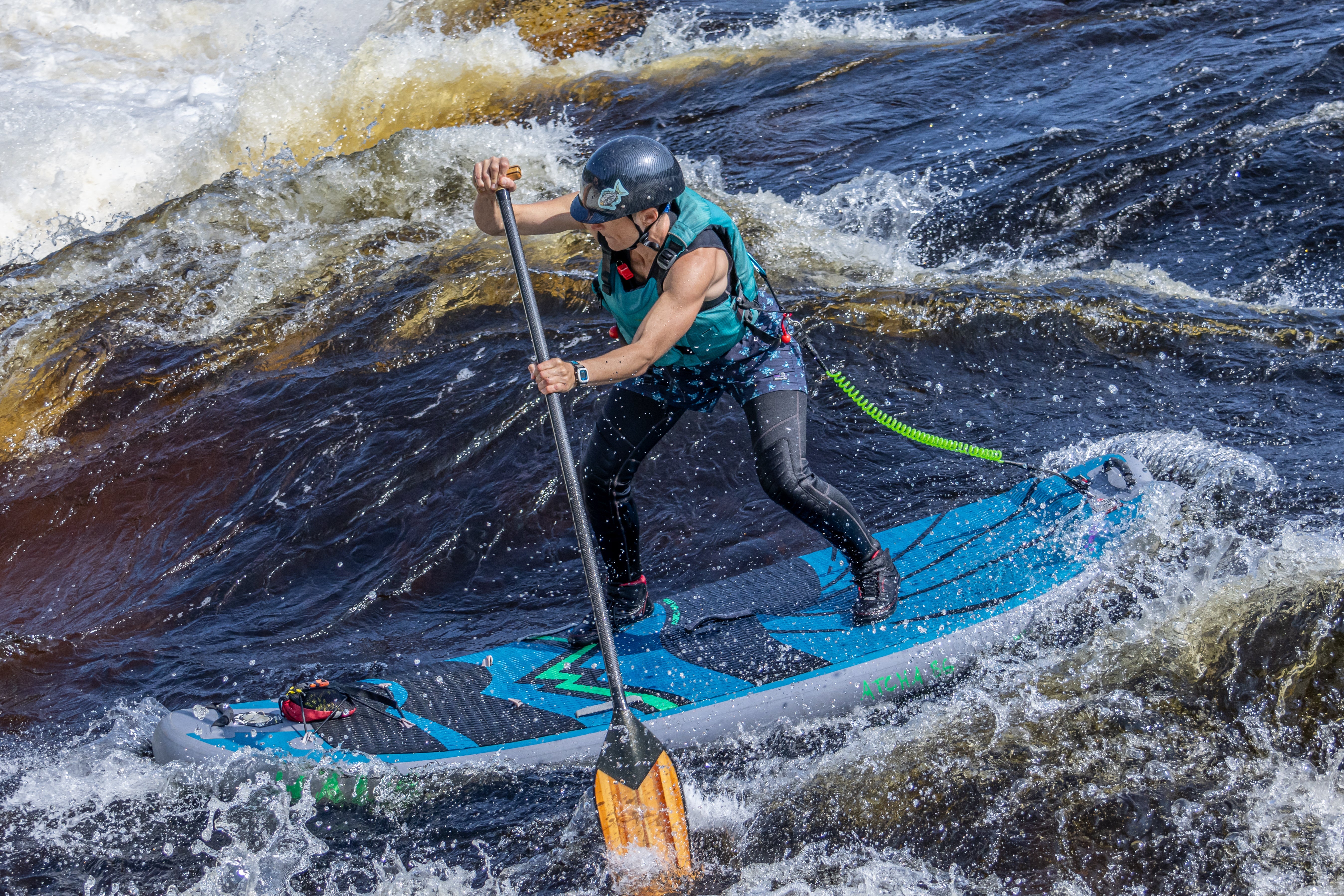
River SUP: How to Choose a Whitewater Paddle Board
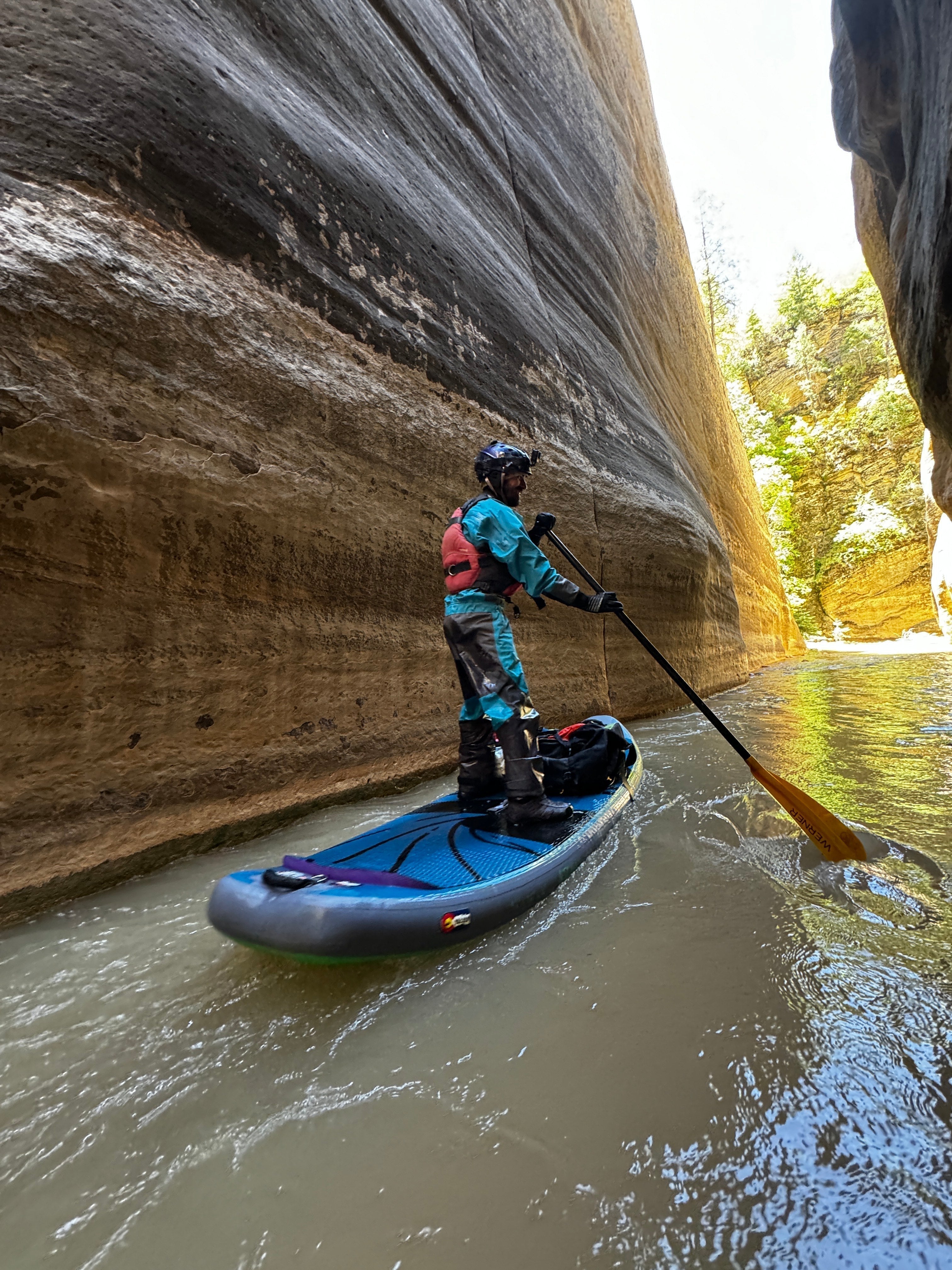
River SUP is one of the most demanding — and most rewarding — disciplines in paddling. The gear that works great on a calm lake will fail you on a moving river. This guide covers exactly what to look for, what to skip, and which board will serve you best across the full spectrum of river paddling: from your first floaty Class I afternoon to serious Class IV technical water.
How River SUP Is Different
Rivers punish boards that weren't designed for them. Obstacles are unpredictable, currents change direction constantly, and shallow water is the norm. Features that matter on a flatwater lake — length for speed, narrow profile for efficiency — become liabilities when you're reading rapids and avoiding rocks.
A great river SUP makes different trade-offs: shorter for maneuverability, wider for stability in turbulent water, and built with a fin system that handles bottom contact without snapping. Here's what to evaluate.
What Makes a Great River SUP
Fin System: The Most Important Spec
On a river, a fixed fin isn't a minor inconvenience — it's a liability. A large center fin dragging through shallow water stops your board dead, and a hard rock impact can snap a standard fin box clean off the deck.
- Removable click-in fins — Better than fixed, but you have to remove them before rocky sections and reinstall after. Interrupts your flow on the water.
- Shortened flatwater fins — Small fixed fins reduce drag but sacrifice tracking and performance.
- Retractable fin systems — The only solution designed around how rivers actually work. Hala's StompBox 2.5 lets you stomp fins flat to glide over rocks, then snap them back up in seconds. Combined with ClickFin Side Bites for surf and edging, this is the setup that separates a river board from everything else.
Length, Width, Rocker
Shorter boards turn faster and respond more quickly between obstacles. Most dedicated river SUPs run 8–10 feet; all-around boards that pull double duty typically land around 10 feet. Width matters for stability in turbulent water — river-capable boards typically run 32–36 inches wide.
Rocker is the upward curve from nose to tail. More rocker lifts the nose over waves and holes instead of diving under them. River boards have more pronounced rocker than flatwater boards — it's the reason a whitewater-specific board doesn't pitch you forward every time a wave hits the nose.
Construction: Built for Abuse
Look for fusion drop-stitch PVC layers bonded directly to the internal structure (not glued on top), glued-and-welded rails, and substantial deck pad coverage across the full board. You'll be moving around constantly on rivers — good river boards extend the deck pad well past center. Hala backs every board with a 5-Year Warranty because the construction can hold up to it.
The Hala River Lineup — All Five Boards
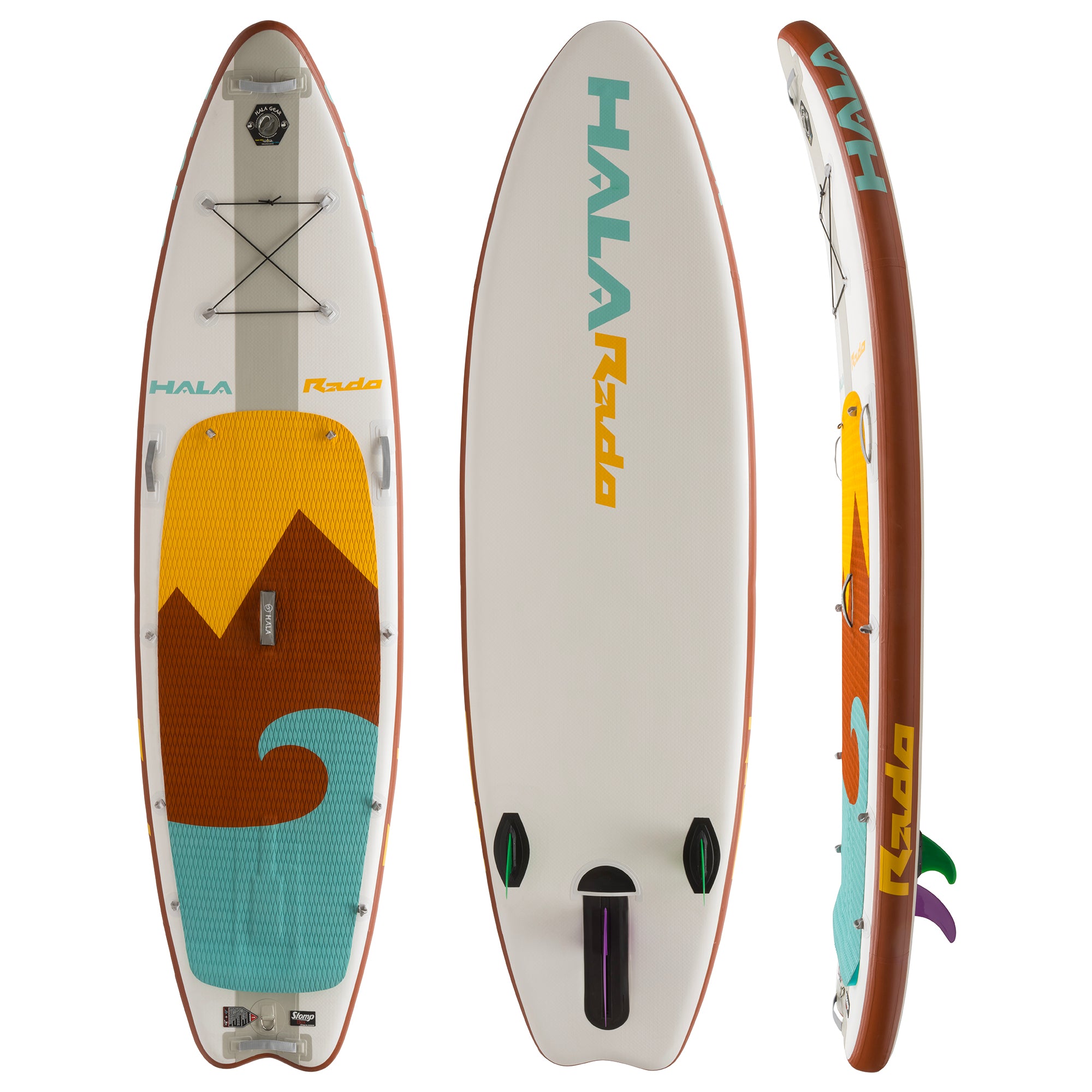
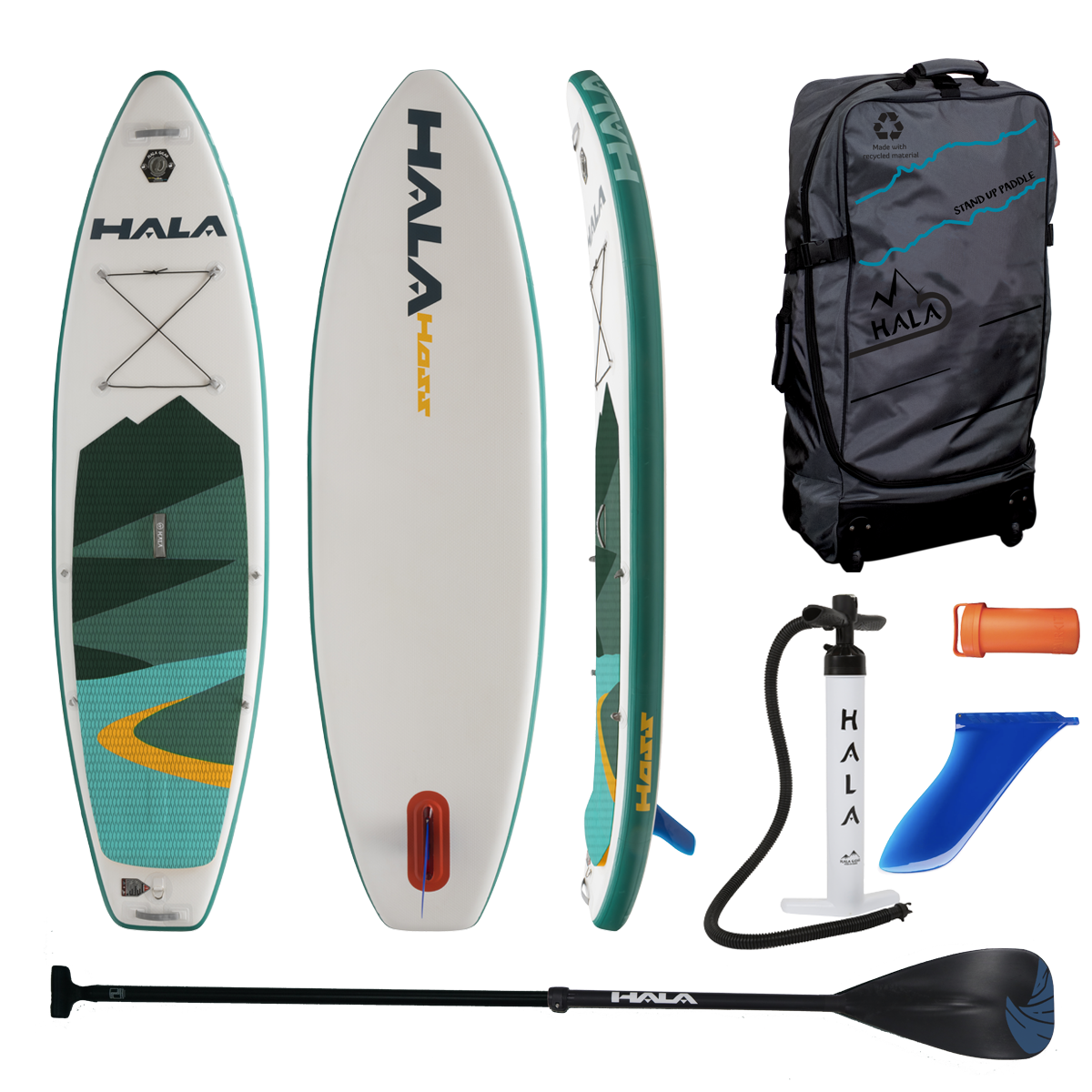
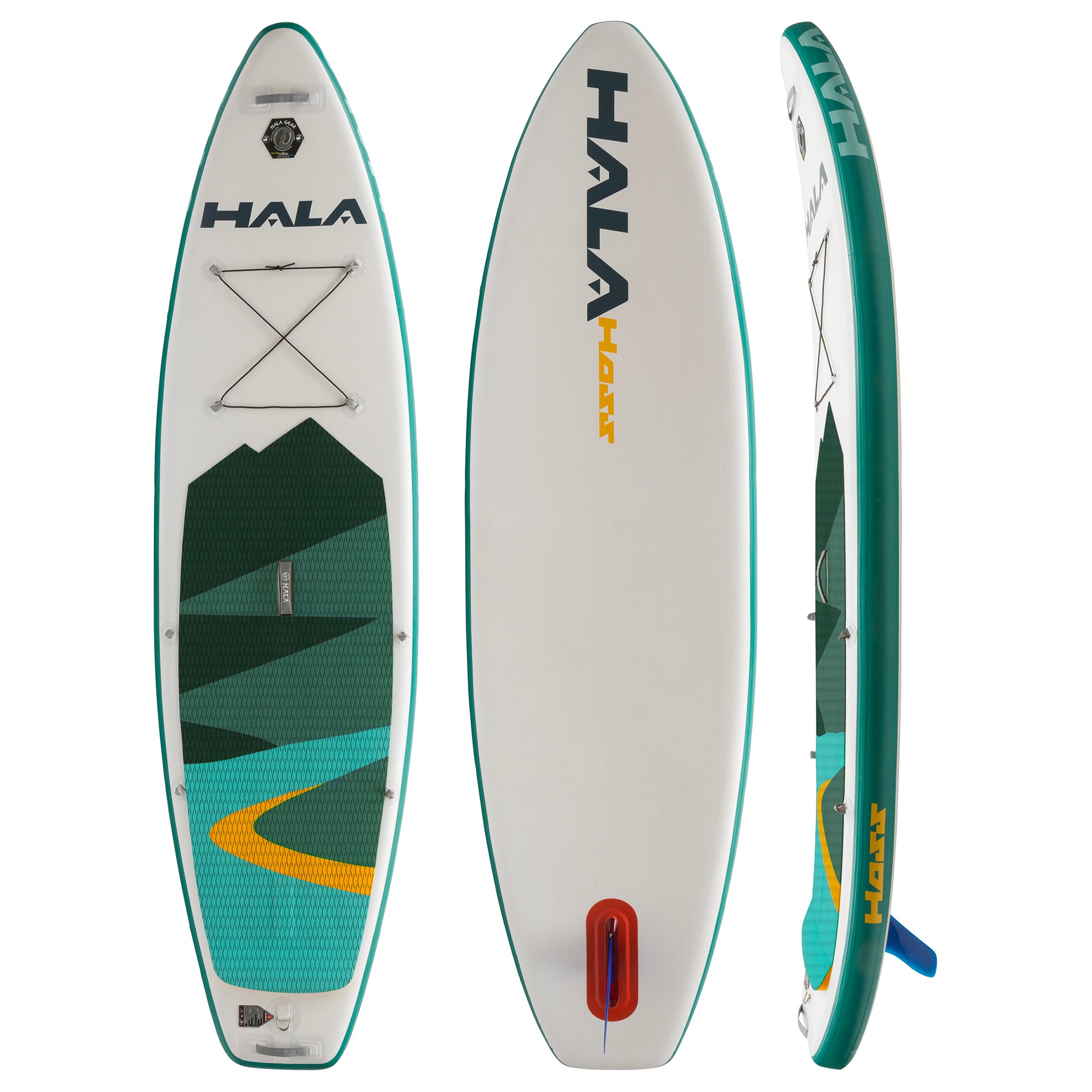
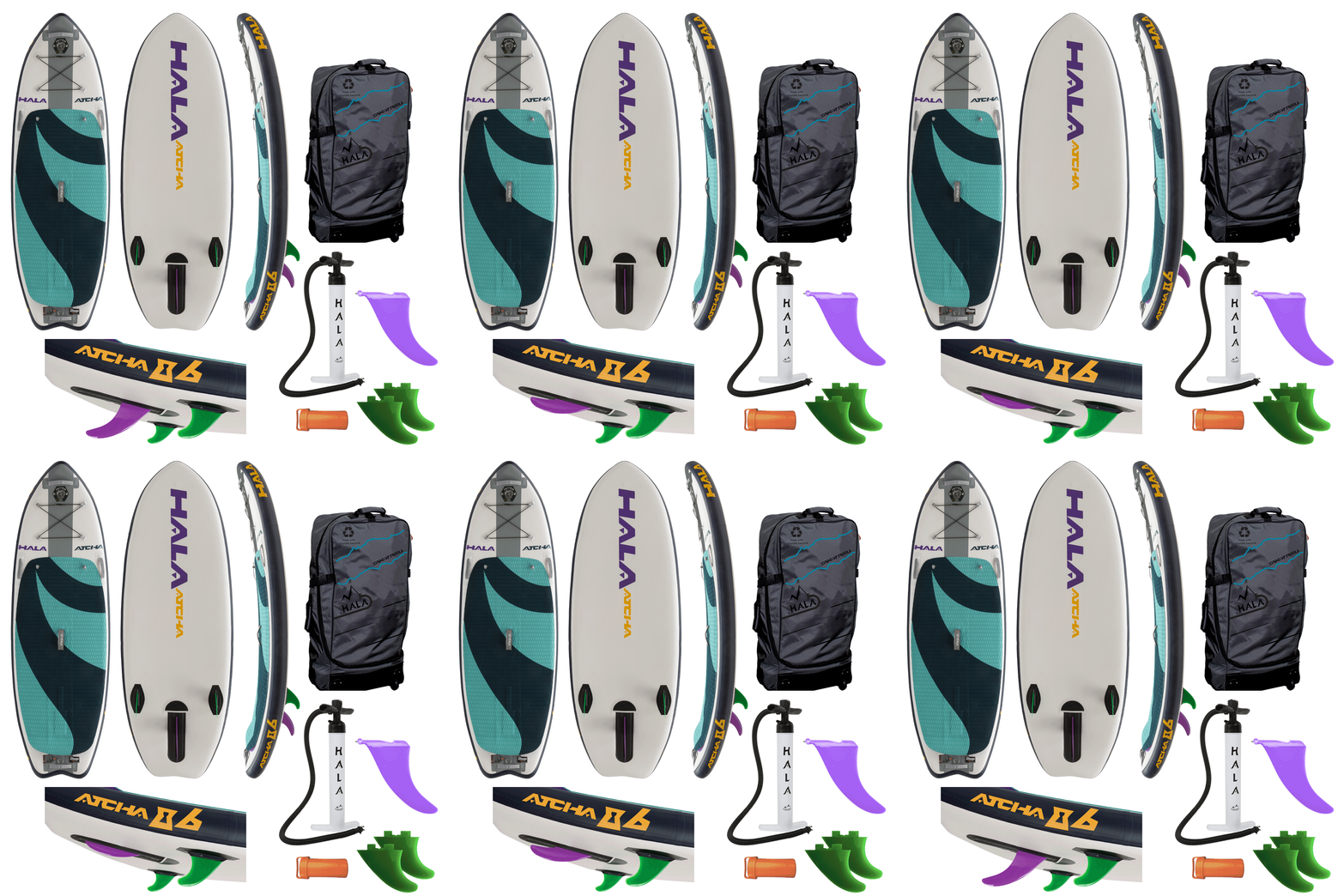
Every board below was designed and field-tested on Colorado rivers. Here's the full range, from first-river-ready to expert playboat specialist.


Which River Board Is Right for You?
| Board | Best River Class | Fin System | Length x Width | Price | Ideal Paddler |
|---|---|---|---|---|---|
| Hoss | Class I-II | Standard US box | 10'10" x 35" | $799 | Beginners, max stability, fishing |
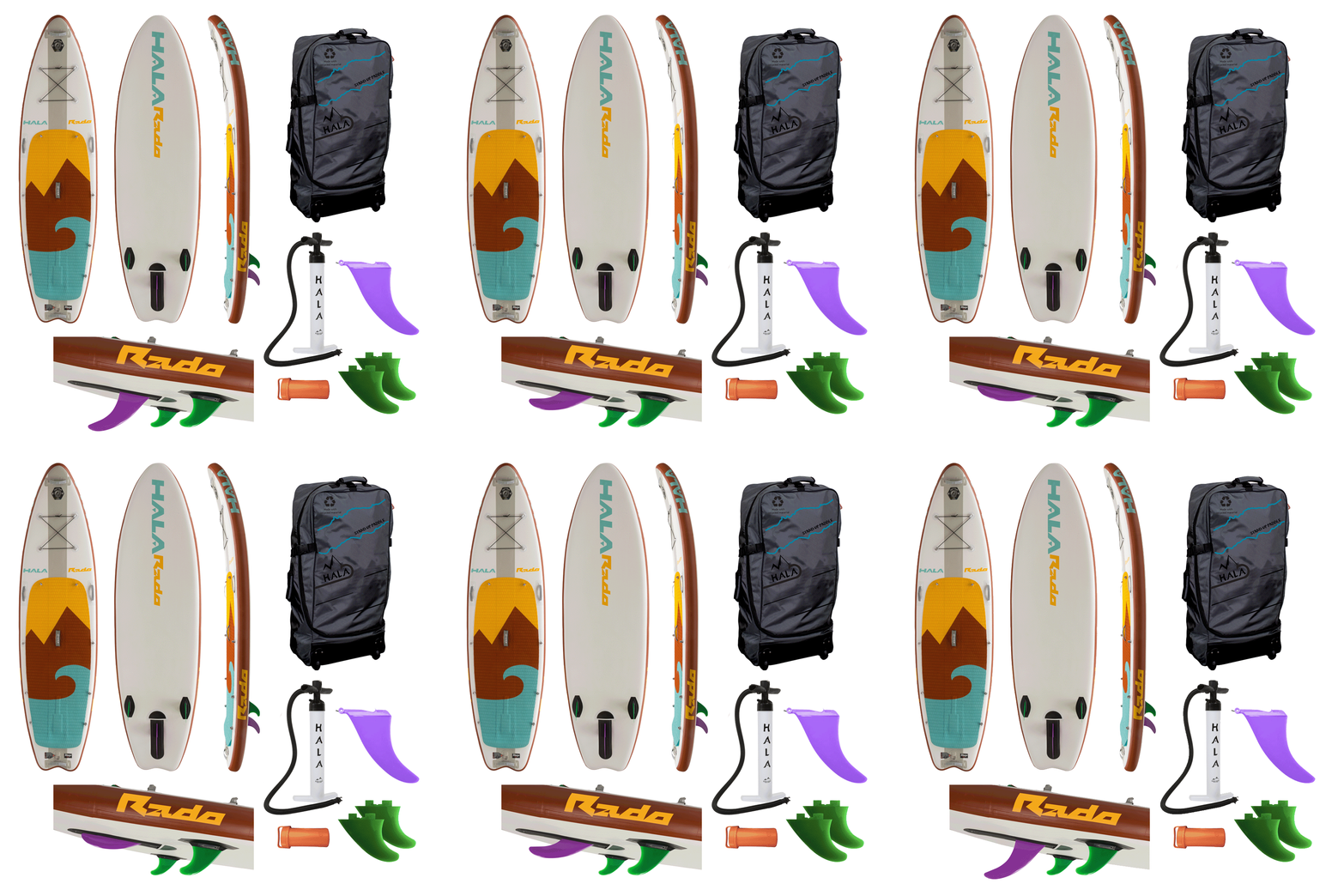
| Rado | Class I-III | StompBox 2.5 + ClickFin | 10'10" x 35" | $1,199 | All-water, all skill levels, fishing, expedition |
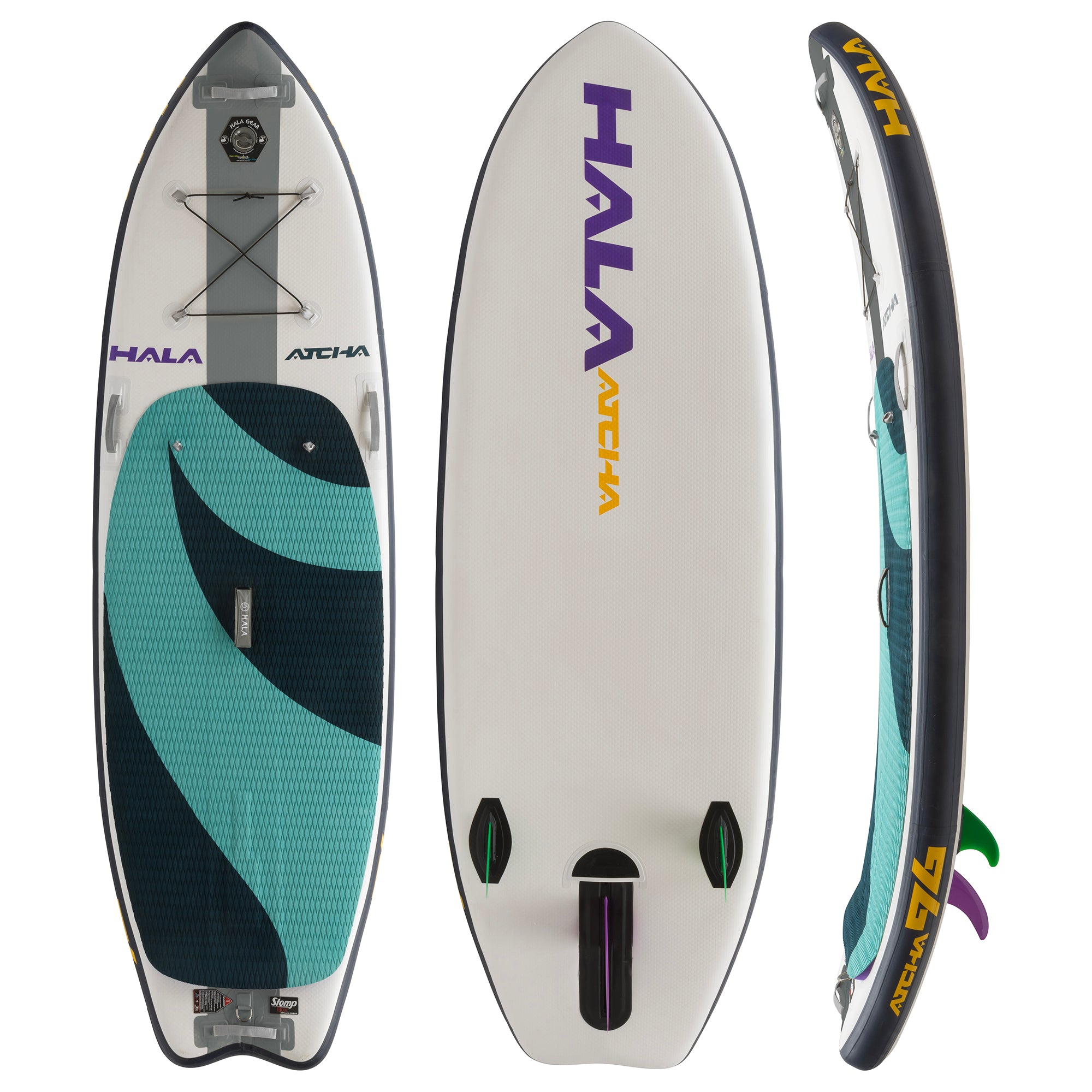
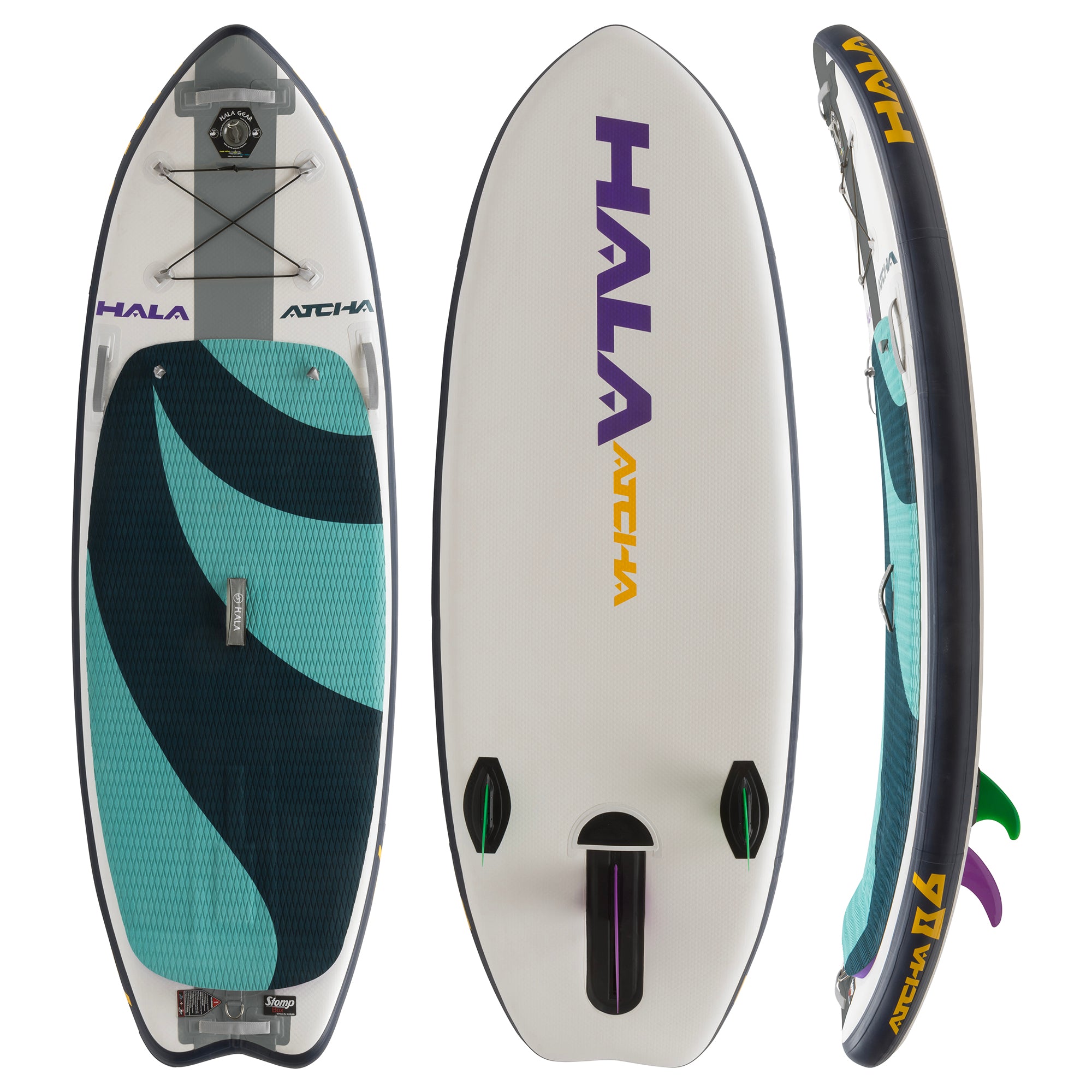
| Atcha 96 | Class II-IV | StompBox 2.5 + ClickFin | 9'6" x 36" | $1,199 | Dedicated WW entry, intermediate+ |
| Atcha 86 | Class II-IV | StompBox 2.5 + ClickFin | 8'6" x 34" | $1,199 | Performance WW + surf, intermediate+ |
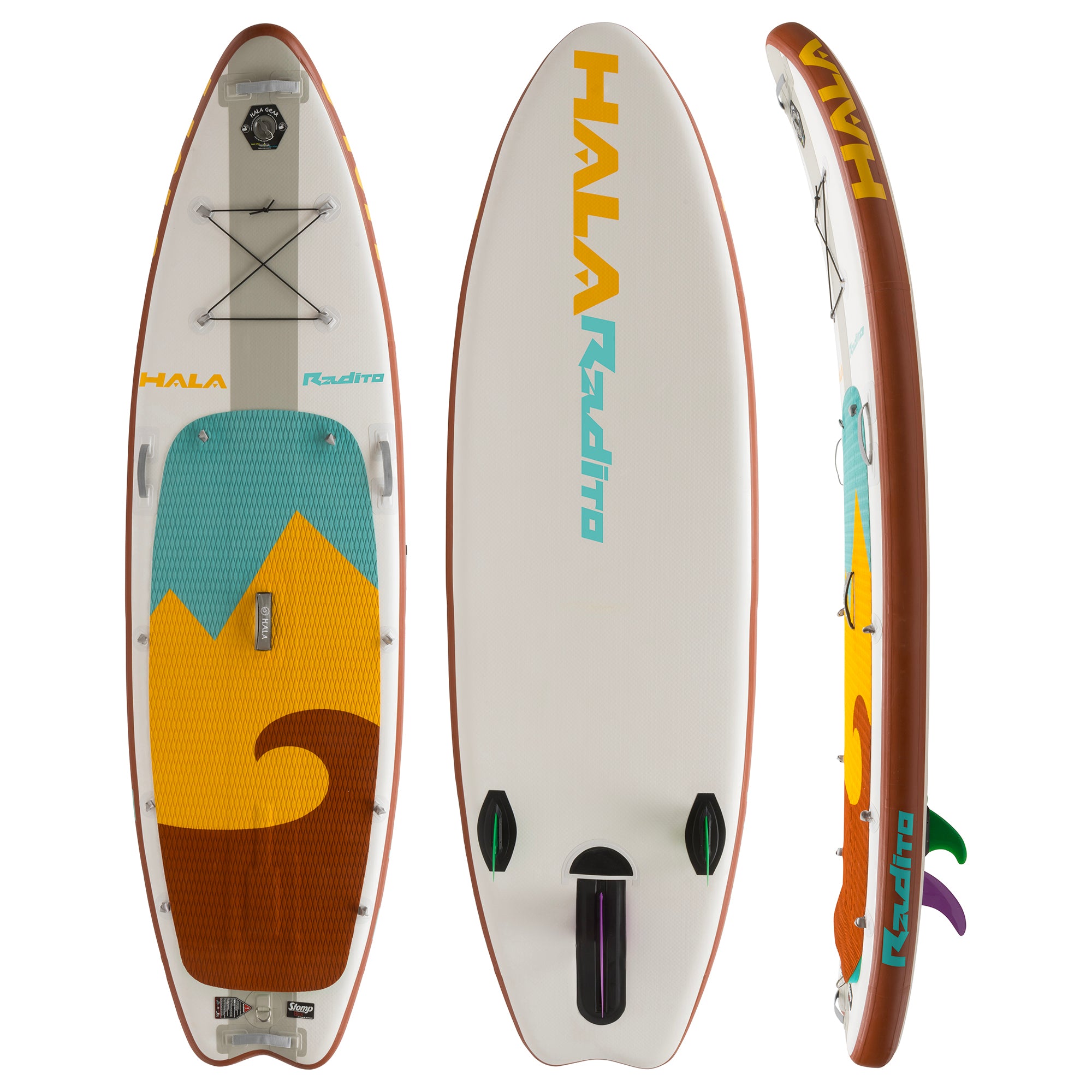
| Radito | Class I-III+ | StompBox 2.5 + ClickFin | Compact | $1,199 | Advanced playboating (preorder) |
- New to rivers, want maximum forgiveness — Hoss
- One board for flatwater, rivers, and whitewater — Rado
- Committing to whitewater, want a forgiving start — Atcha 96
- Experienced whitewater paddler, want maximum performance — Atcha 86
- Most technical, maneuverable river setup possible — Radito
Not sure between the Atcha 96 and 86? If you're new to whitewater SUP or a bigger paddler, the 96 gives you more platform and forgiveness. The 86 rewards paddlers who already know how to read water and want a board that responds the moment they commit to a line.
Essential River SUP Gear
- PFD: Required by law on most rivers. Wear it every time — paddlers on SUPs are not exempt.
- Leash: Use a quick-release leash on rivers only. A standard ankle leash can trap you in a hydraulic. Quick-release lets you ditch the board instantly if you need to swim.
- Helmet: Essential on Class III and above. Non-negotiable on Class IV+.
- Paddle: Size 3-6 inches shorter than your flatwater paddle — a lower blade entry helps you brace and stay low in rough water. See the paddle sizing guide for the whitewater elbow method.
Frequently Asked Questions
What is the best inflatable paddle board for rivers?
For most river paddlers, the Rado is the best single purchase. It covers everything from mellow Class I flatwater to solid Class III whitewater on the same board with the StompBox 2.5 retractable fin system — no fin swaps, no tool changes. If you're specifically targeting technical Class III-IV whitewater, start with the Atcha 96. If you're brand new to rivers and want maximum forgiveness, the Hoss handles Class I-II well at a lower price point.
What is the StompBox fin system and why does it matter?
The StompBox is Hala's patented retractable center fin — spring-loaded to full deployment at all times and designed to deflect clean off bottom contact, snapping back to full depth instantly. No manual operation. No fin swap mid-rapid. Every board with StompBox is paired with ClickFin Side Bites for edging and surf performance. It's the single biggest factor that separates a Hala river board from a flatwater setup adapted for rivers.
Is river SUP safe for beginners?
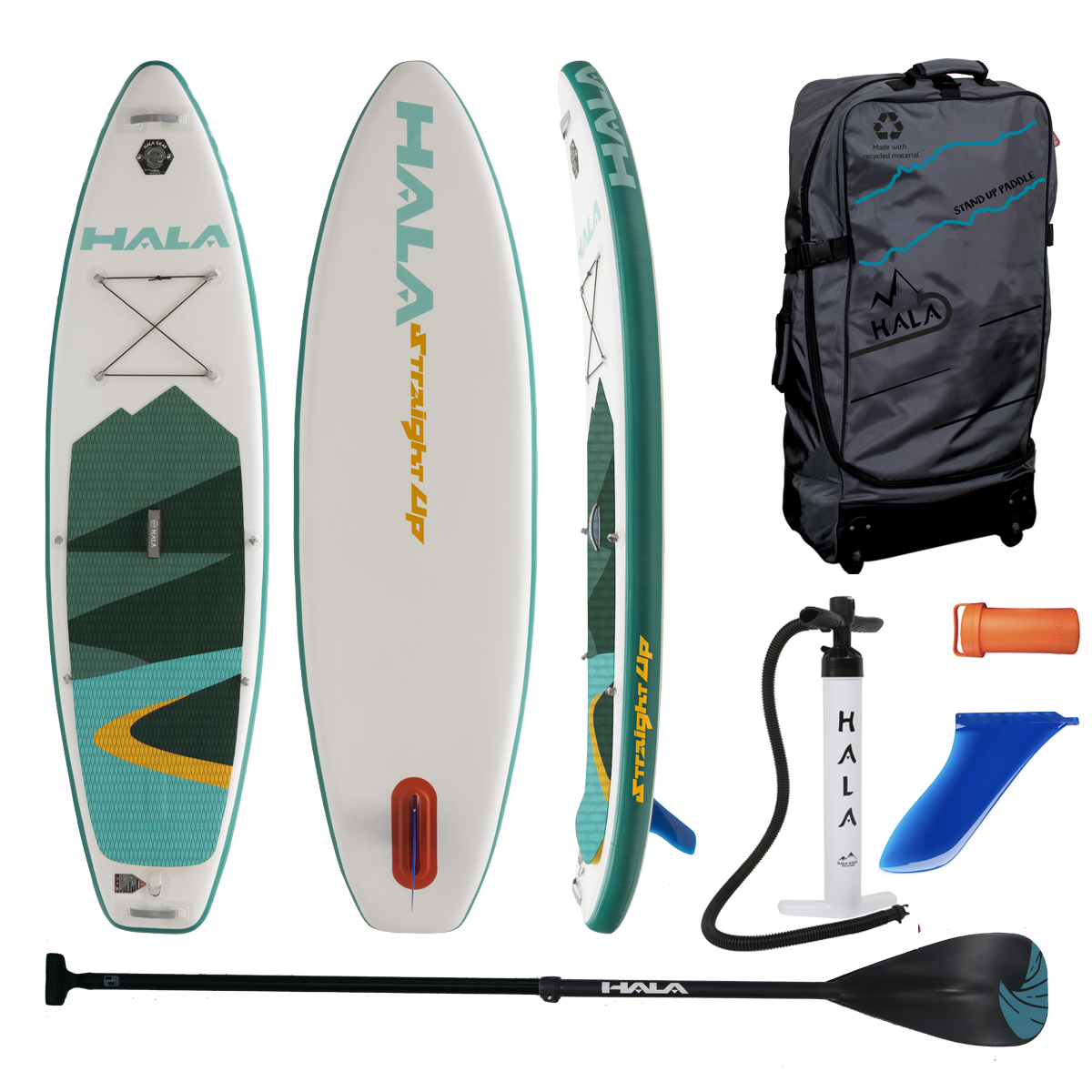
River SUP on Class I-II is accessible to beginners who have basic flatwater balance. Class III and above requires real river reading skills and is not recommended as a starting point. The right progression: build flatwater comfort on the Hoss or Straight Up, take a river safety course, then move to easy moving water. Essential gear: a quick-release leash (never ankle), a PFD worn at all times, and a helmet on Class III+.
What PSI should a river SUP be inflated to?
All Hala boards run at 15-18 PSI. Whitewater boards perform best at 18 PSI — full rigidity means a consistent platform when a wave is pushing hard against the nose. Flatwater boards can run at 15 PSI comfortably. A board underinflated flexes under load, which makes it slower, less stable, and harder to control.
How much should I spend on a river SUP?
Plan on $799-$1,199 for a board built for actual rivers. Sub-$400 inflatables are flatwater boards with fixed fins and minimal rocker — they don't belong in moving water. The extra investment buys you retractable or removable fins, construction rated for rock contact, and rocker profiles that keep the nose lifted through waves. The Hoss at $799 is the entry point for real river capability; the StompBox boards from $1,199 open up Class III and above.
Ready to Get on the River?
Every Hala board is designed and tested on Colorado rivers. Find your board and we'll ship it with everything you need to paddle.
Shop River Boards Whitewater SUP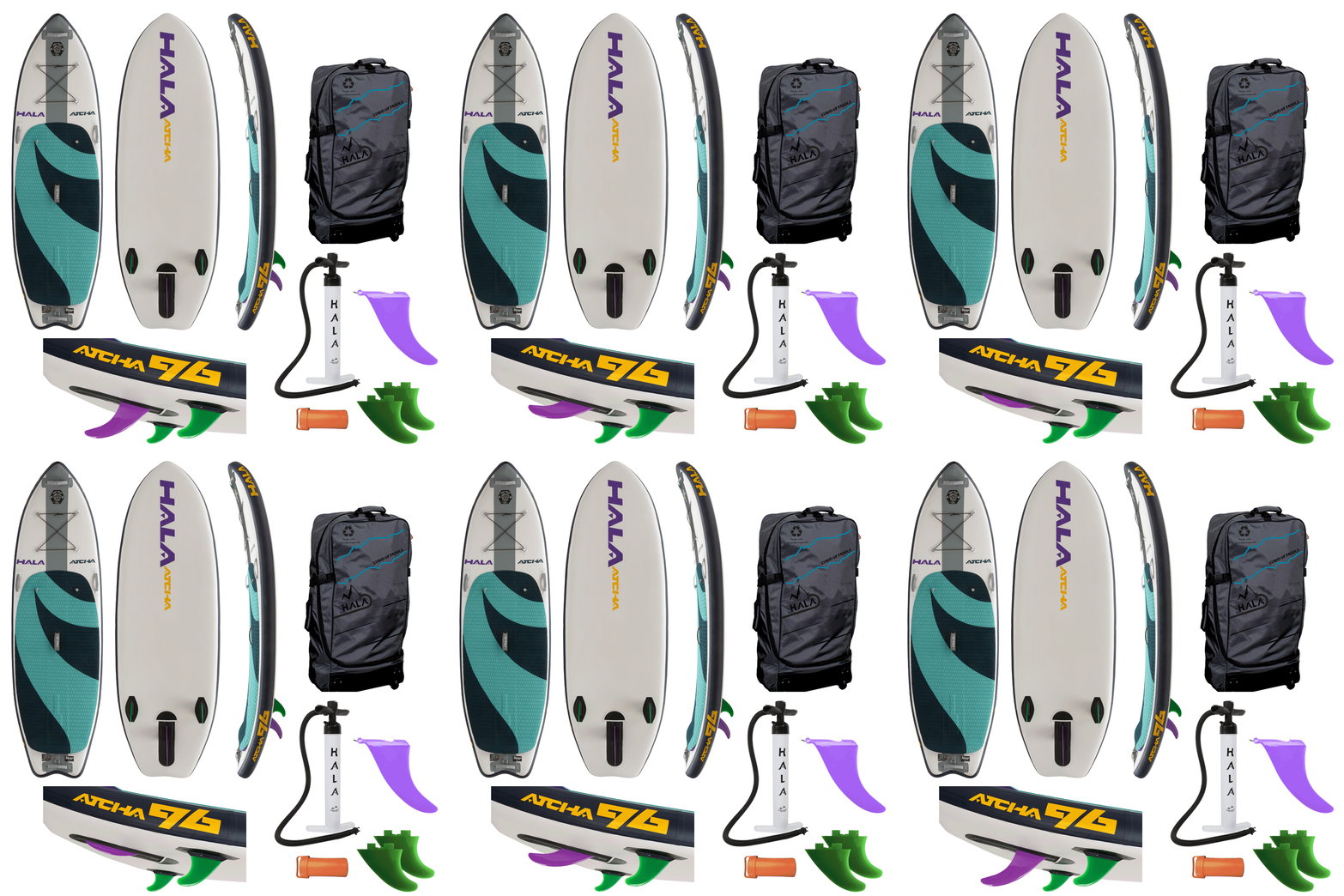



Leave a comment
This site is protected by hCaptcha and the hCaptcha Privacy Policy and Terms of Service apply.