
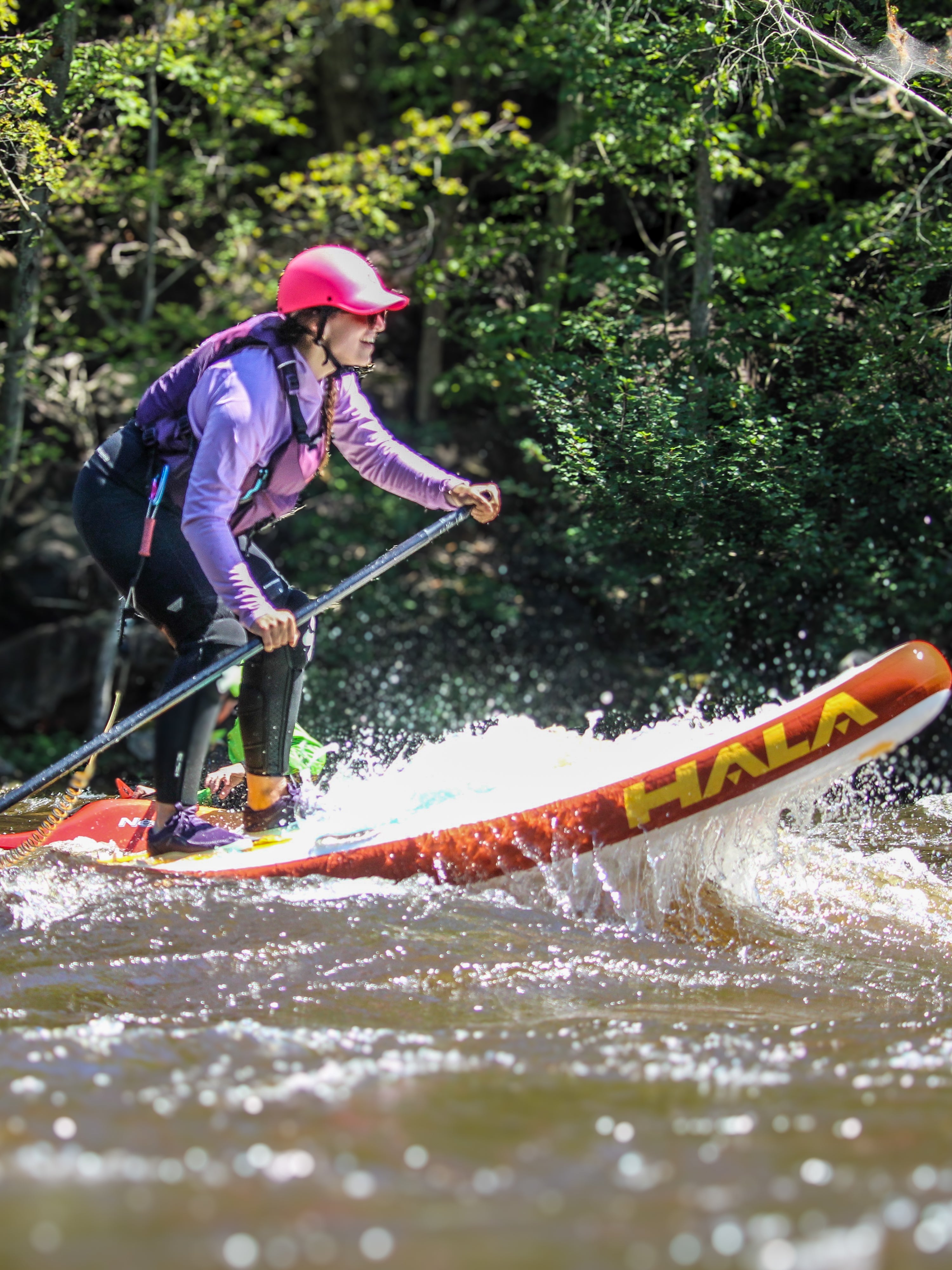
SUP Rocker Profiles
Rocker is the curvature of a board from nose to tail. It's one of the most consequential design decisions in a paddleboard, determining how the board interacts with water, how quickly it turns, how efficiently it tracks, and whether it rises over waves or punches through them.
Every Hala board is designed with a specific rocker profile for a specific type of paddling. We test these profiles on real rivers before they go to customers, not just in a design program. Here's how rocker works and how to read what it means for your paddling.
What Rocker Does
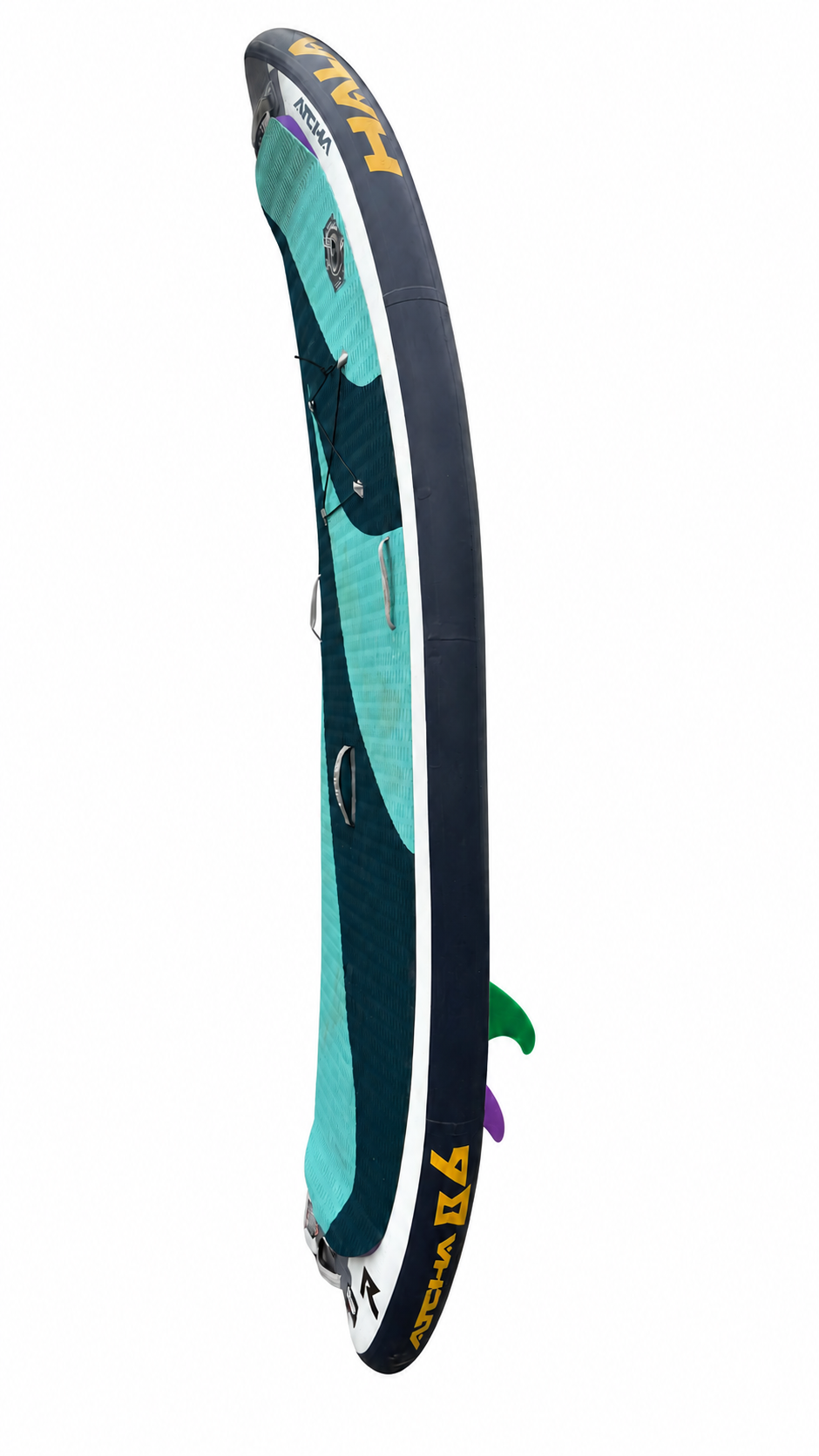
More rocker lifts the nose and tail higher off the water. This lets the board pivot more easily, ride up and over waves rather than into them, and navigate the dynamic, unpredictable water surface of a river. High-rocker boards are harder to paddle in a straight line on flatwater because the curved hull creates more resistance, but they're far more forgiving and maneuverable when water is moving around you.
Where the rocker is concentrated matters as much as how much there is. A board with rocker focused tightly at the tip and tail behaves very differently from a board where the curve carries gradually from center to tip. Hala engineers each profile around the specific demands of how that board is meant to be paddled.
Hala's Three Rocker Profiles
| Profile | Series | Boards | Best For |
|---|---|---|---|
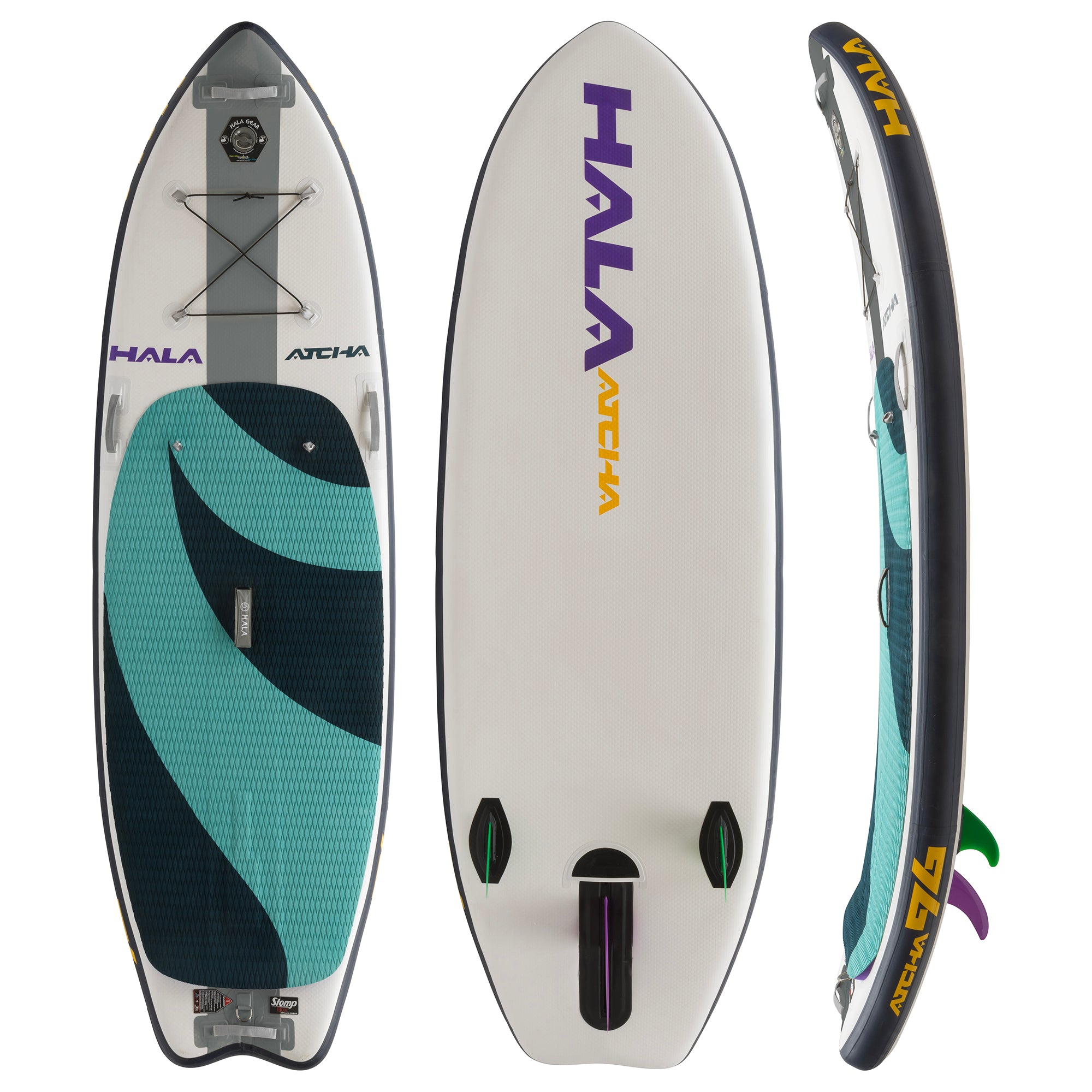
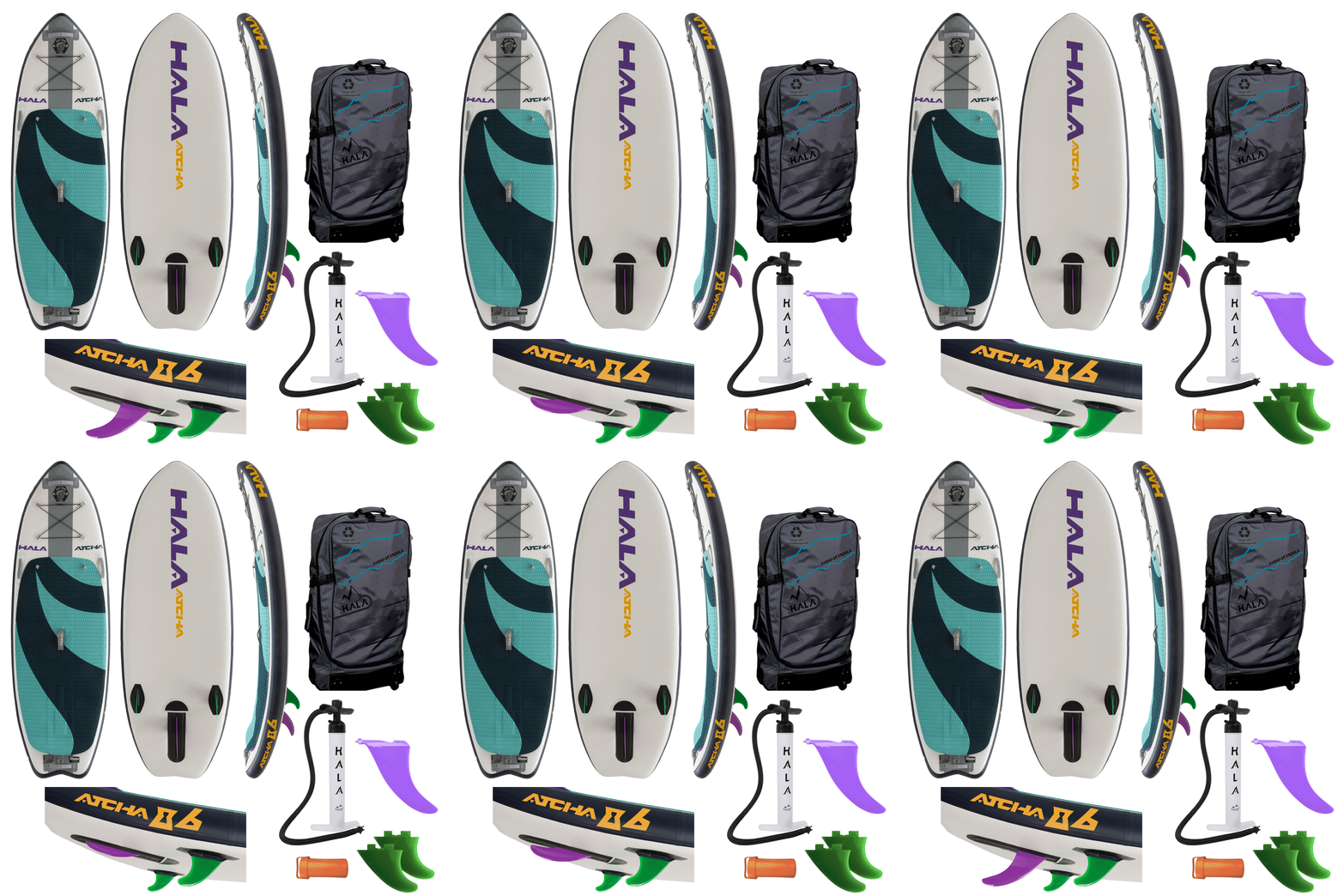
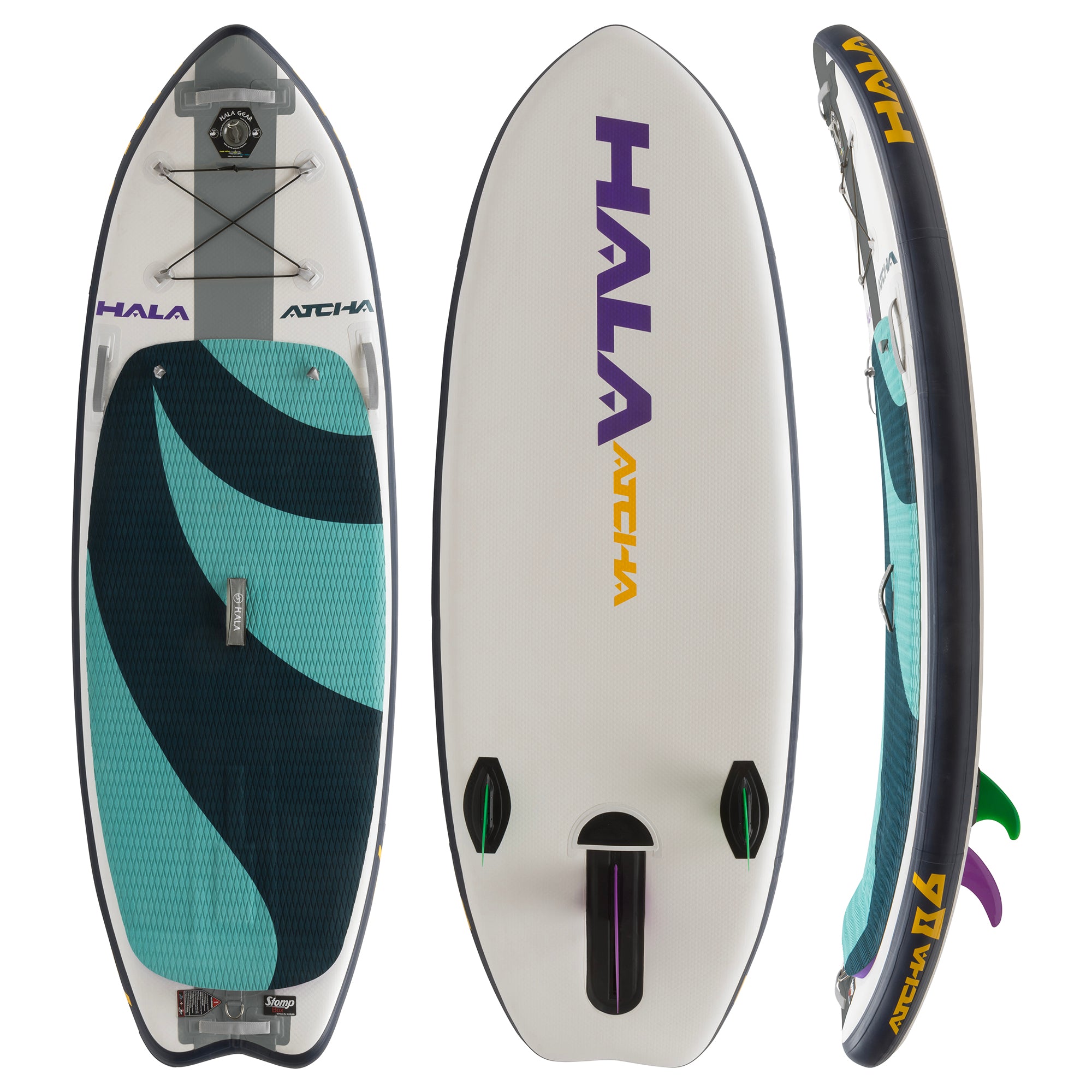
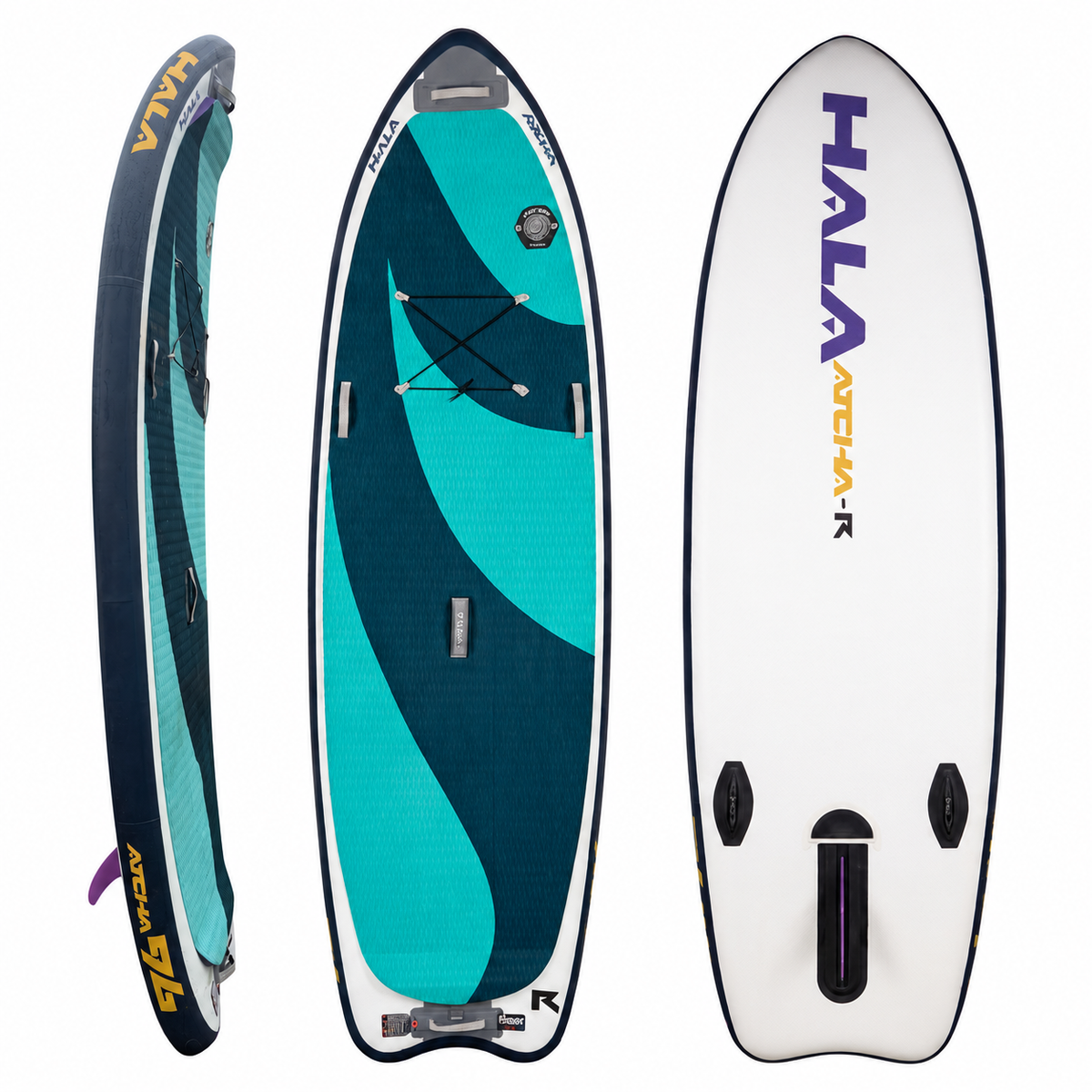
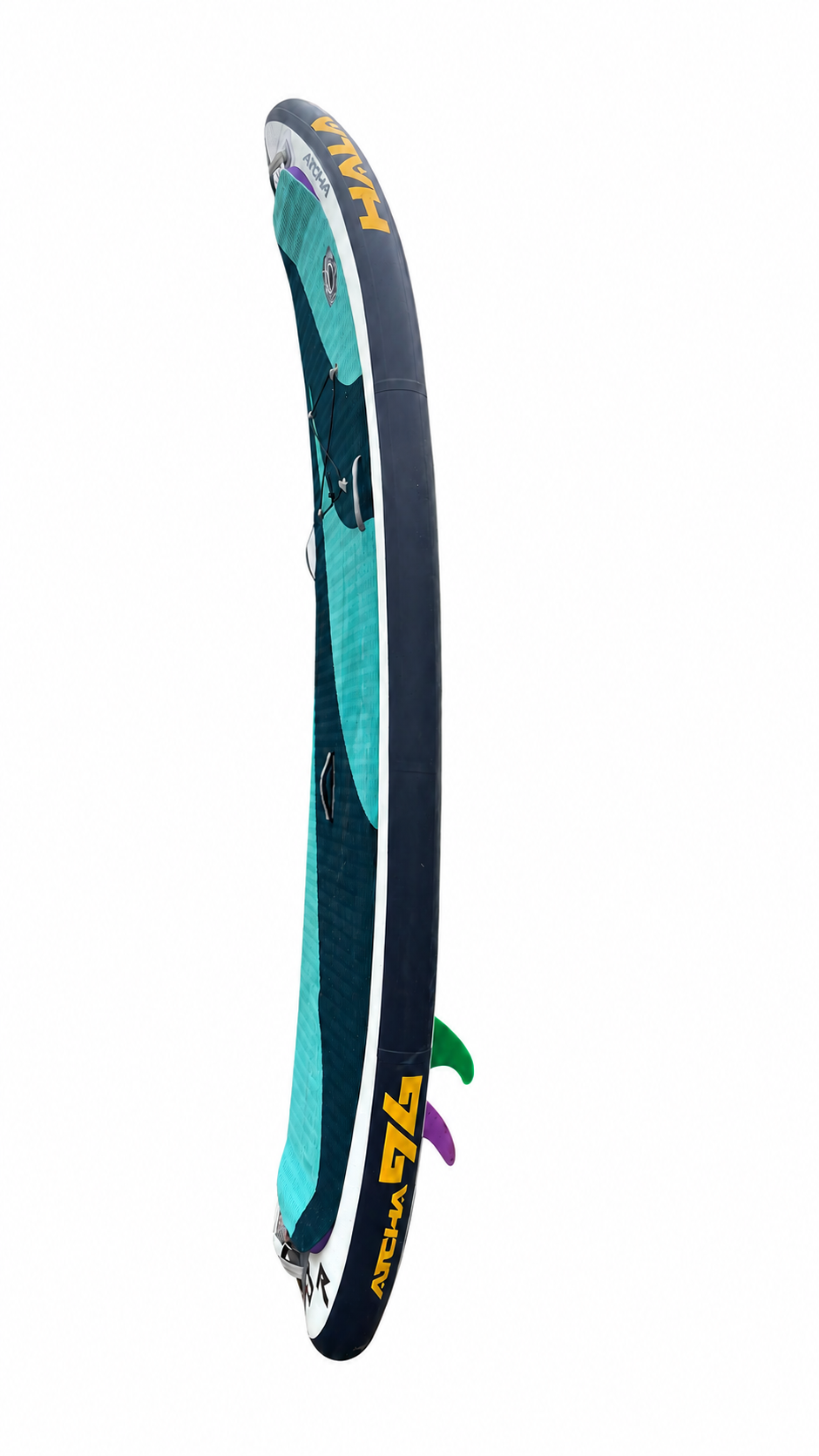
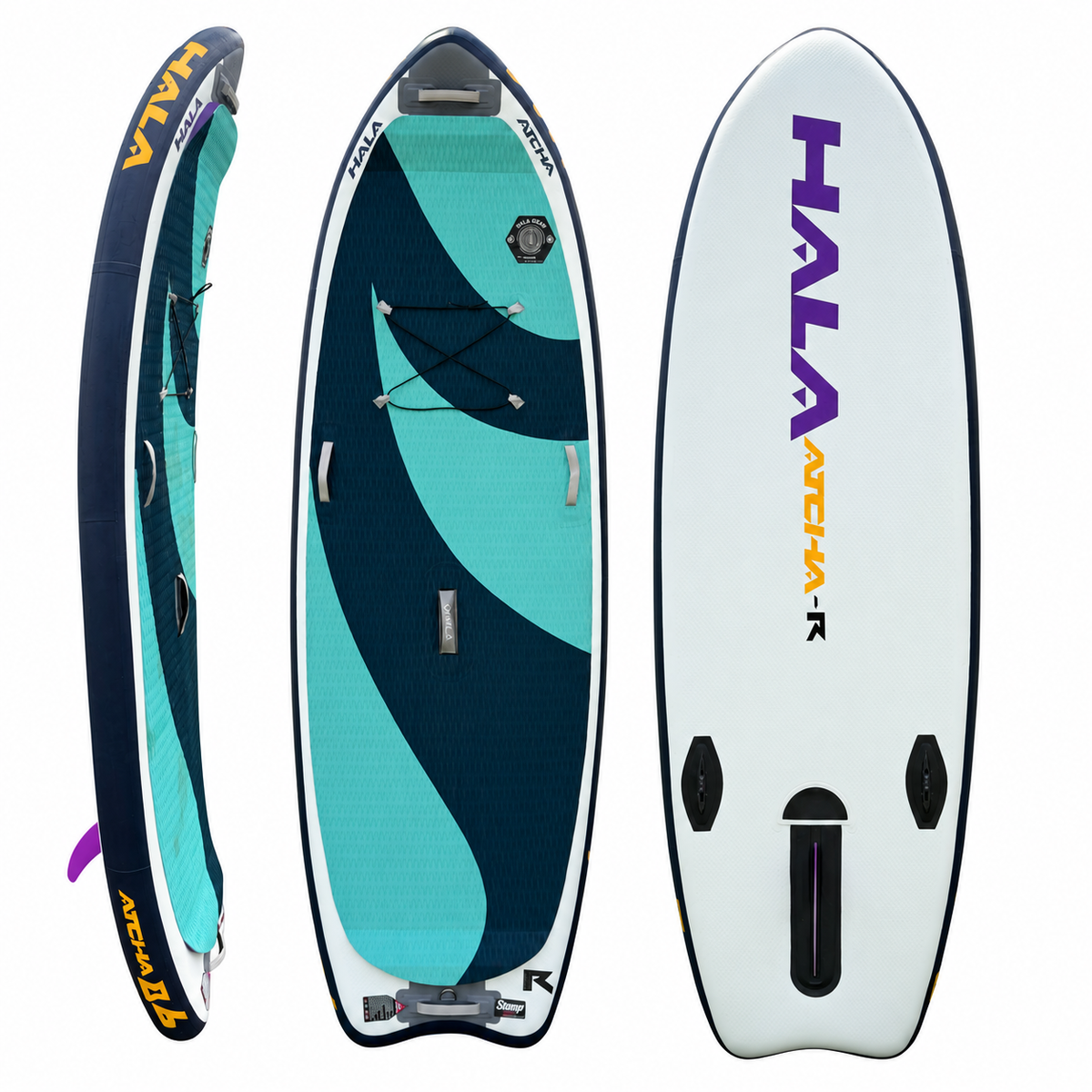
| Concentrated River Rocker | Charge | Atcha 96, Atcha 86 | Class II-IV rapids, river surfing, technical whitewater, steep drops |
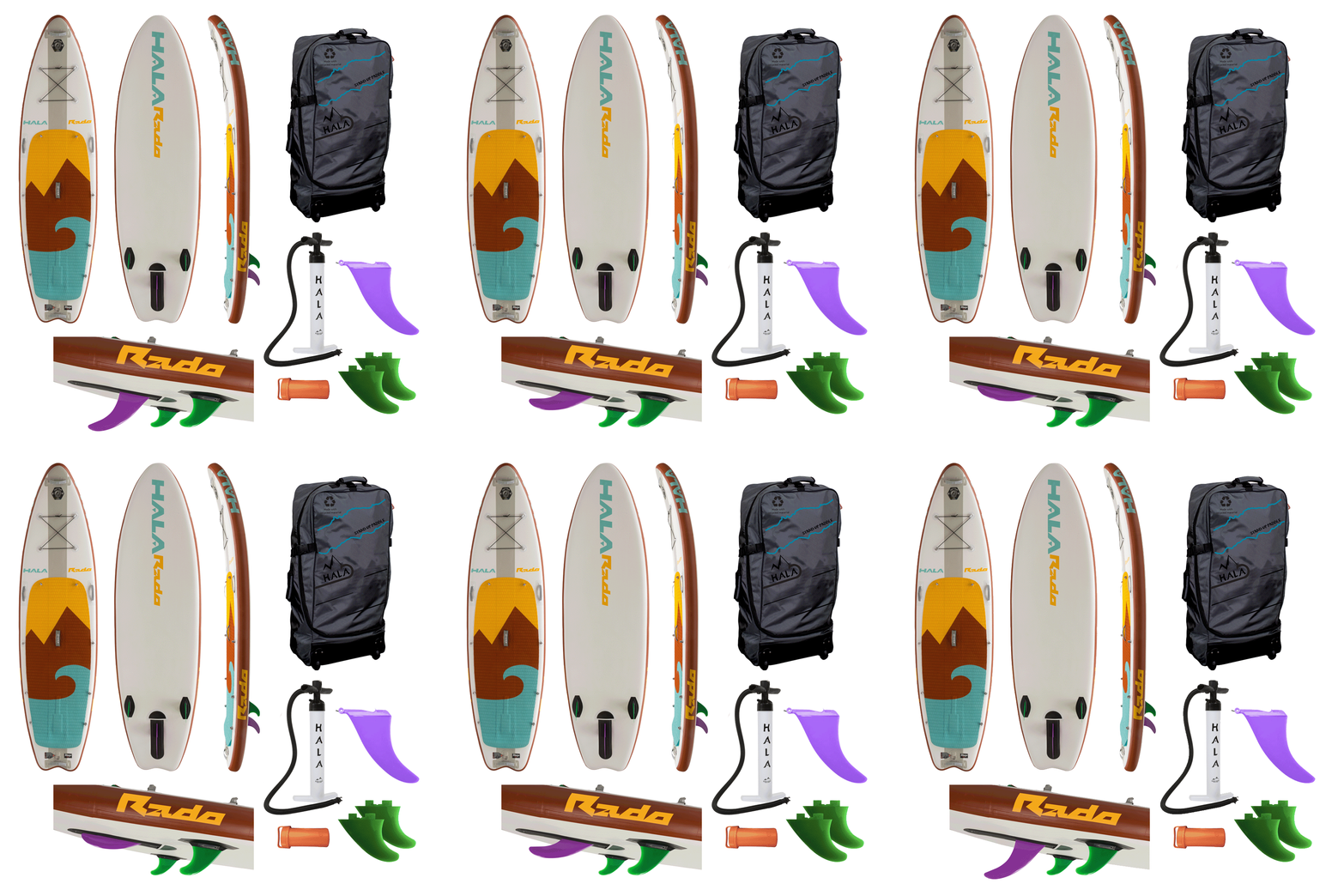
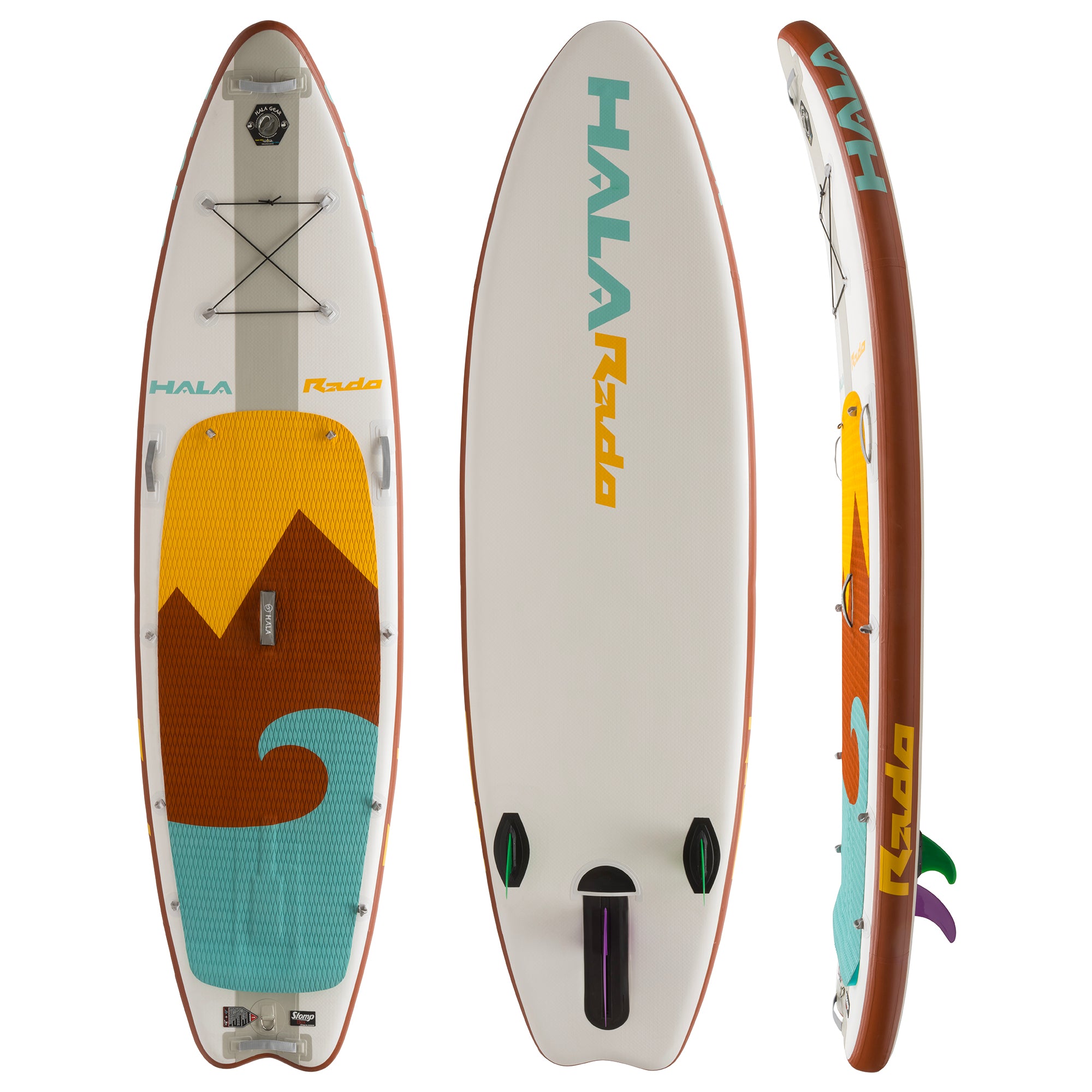
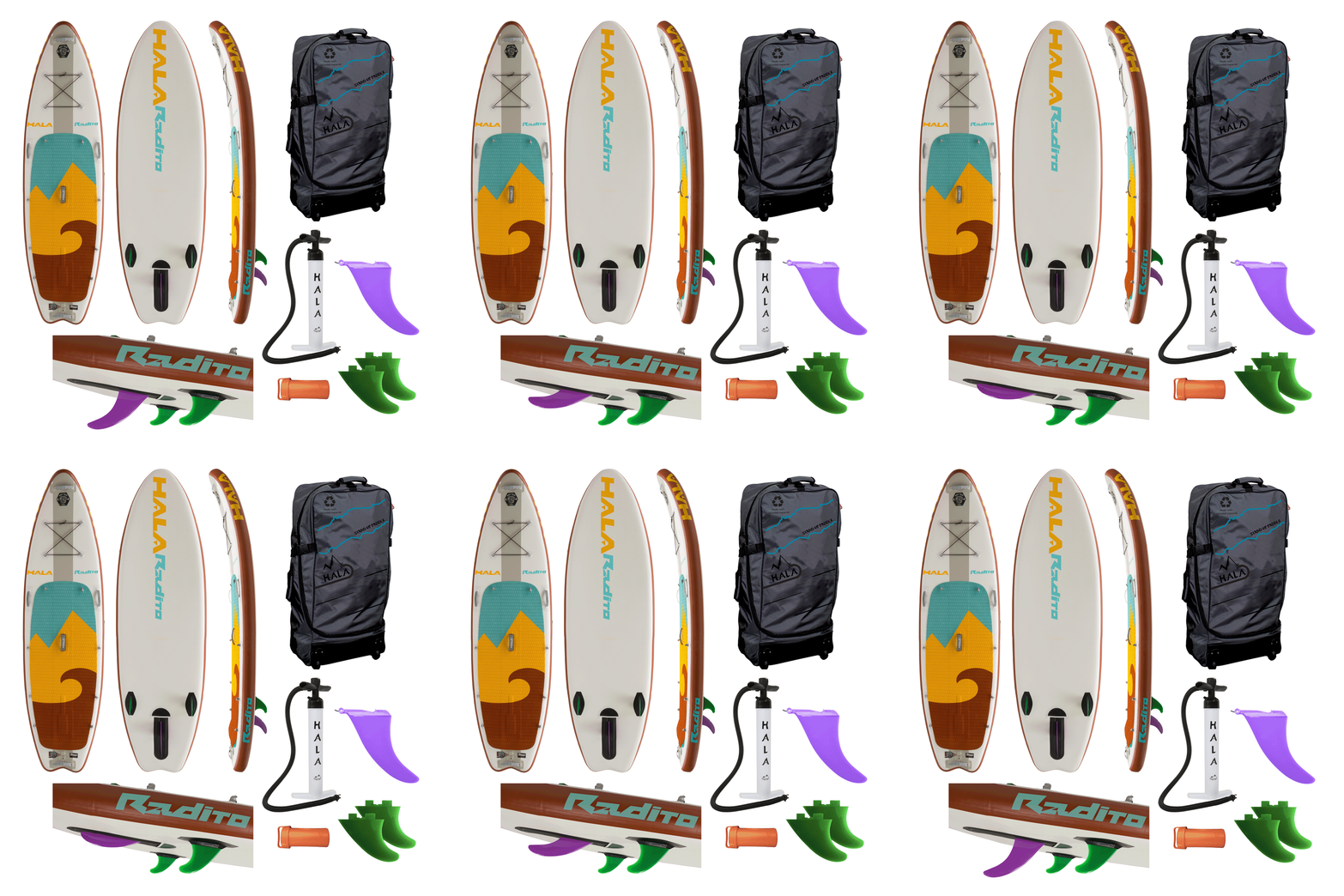
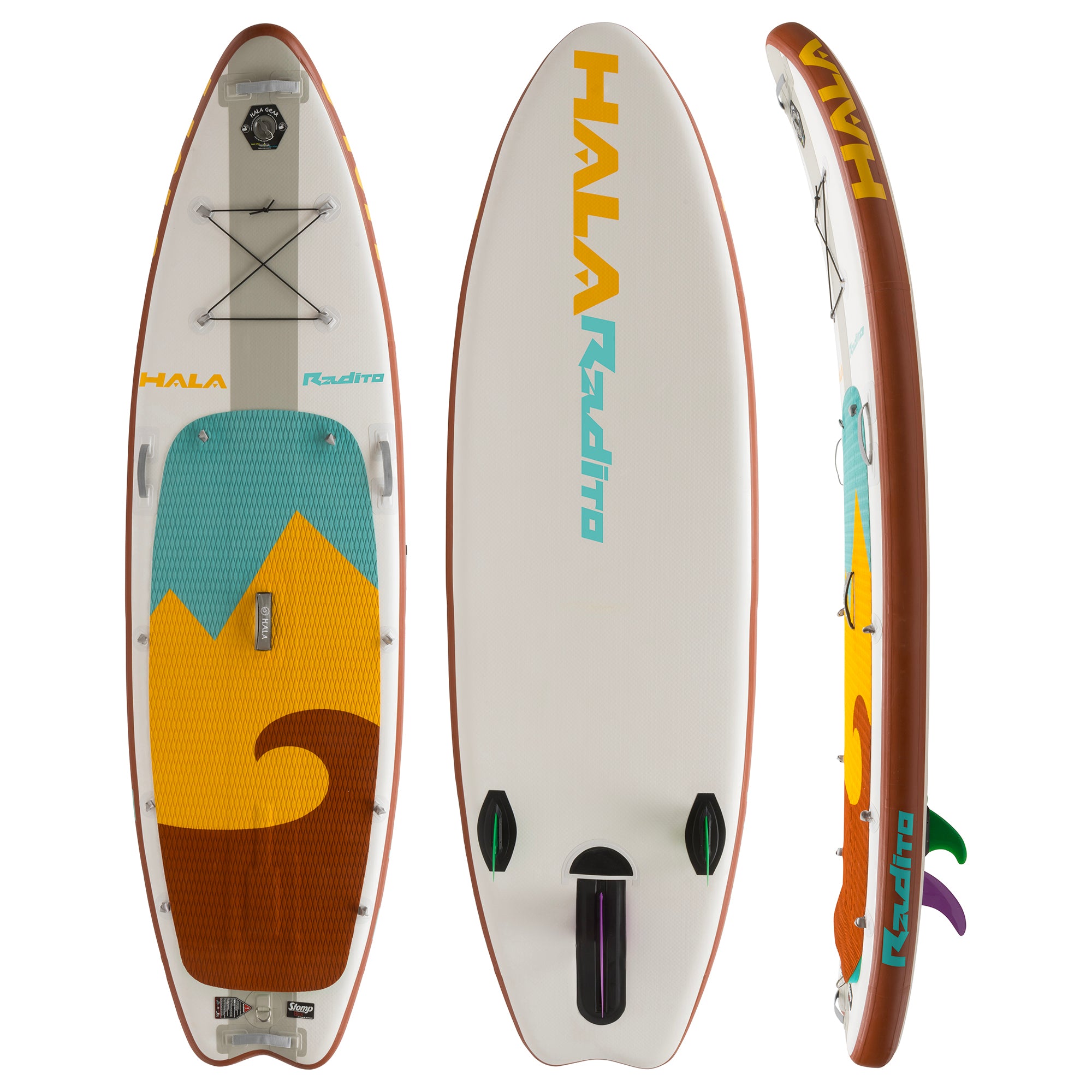
| Extended River Rocker | Adventure | Rado, Radito | Class I-III rivers, lake-to-river versatility, multi-day floats, expedition paddling |
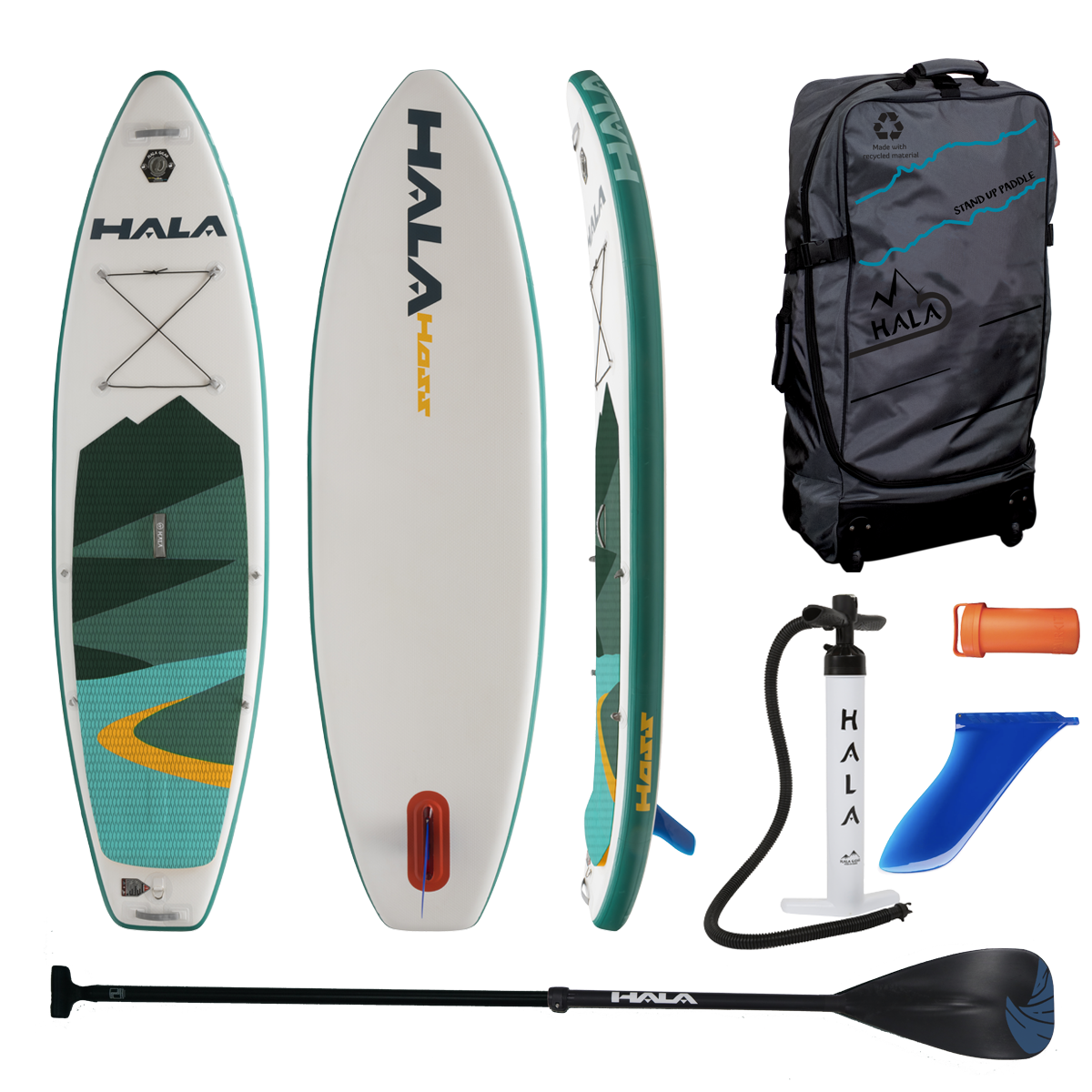
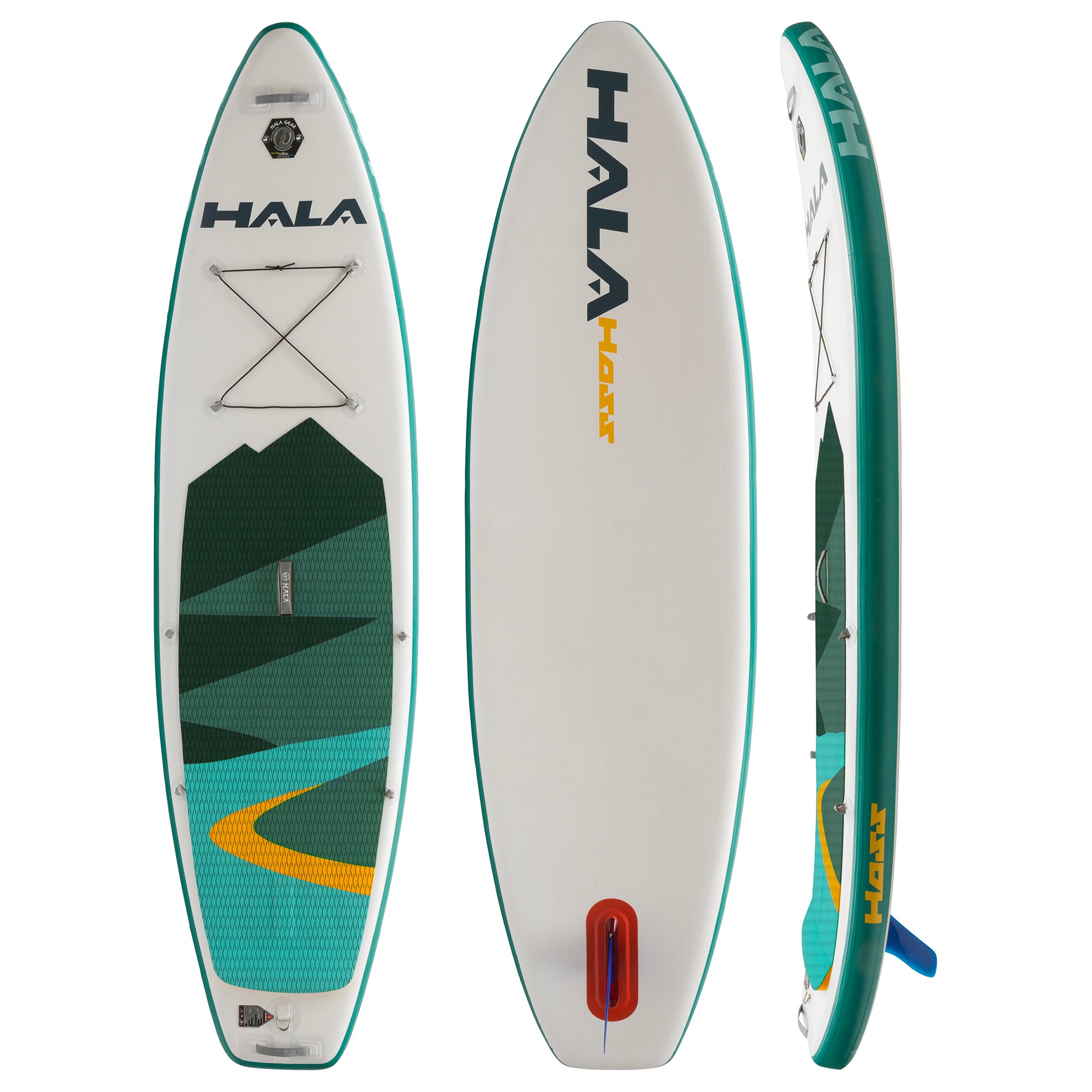
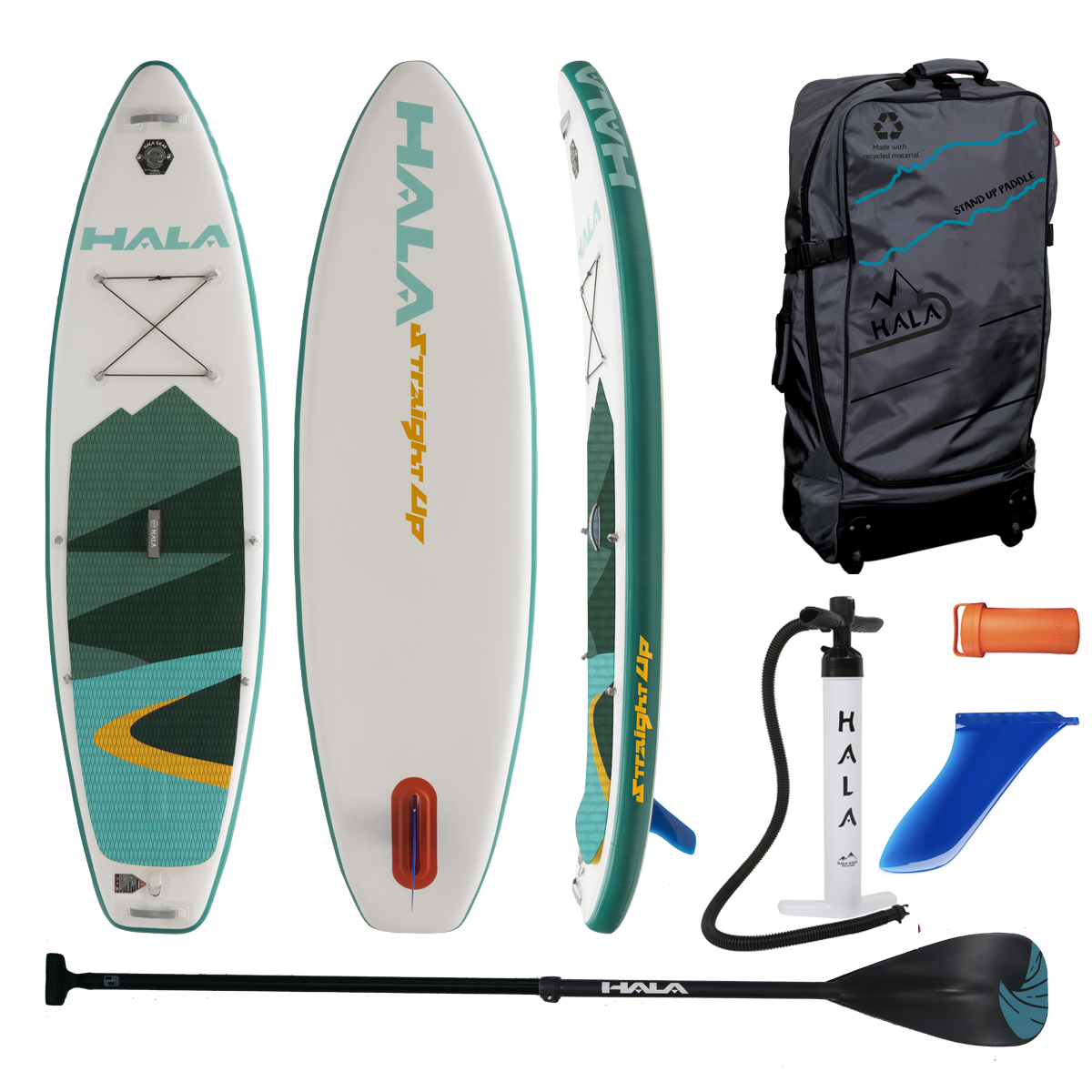
| Progressive Rocker | Cruise | Hoss, Straight Up | Flatwater, ocean, Class I-III rivers (with a shorter fin), yoga, fishing from the board |
Rocker in the Real World
On a typical SUP with no river rocker, the nose tends to submarine into oncoming current or waves, and the hull fights the water instead of riding it. On a concentrated-rocker board like the Atcha, the nose rises naturally over obstacles and into eddies. You spend less energy fighting the water and more energy making the moves you actually want to make.
On the Adventure Series extended river rocker, the board handles Class I-III without the aggressive pivot feel of the Atcha. The longer, smoother arc keeps the board efficient on flatwater and gliding well on distance runs, while still responding naturally when the water starts moving. It's the rocker profile for paddlers who want both.
The Cruise Series Progressive Rocker concentrates the curve tightly at the nose and tail, with a long flat section through the middle. That flat center gives you efficient glide and tracking on flatwater and open ocean. But don't mistake it for a flat board: the concentrated tip and tail rocker makes these boards genuinely maneuverable. They pivot easily, handle waves and chop, and run Class I-III rivers confidently with a shorter fin. More capable than they look, by design.
Why This Matters for Your Board Choice
Primarily flatwater, ocean, or rivers up to Class III? Progressive Rocker. Splitting time between flatwater and Class I-III rivers with some expedition paddling? Extended River Rocker. Rivers are the primary plan and you want to surf features and push limits? Concentrated River Rocker. The right rocker profile makes paddling feel effortless. The wrong one makes every stroke a fight.
SUP shapes and tails | Fin systems | Intentional design | Find your board
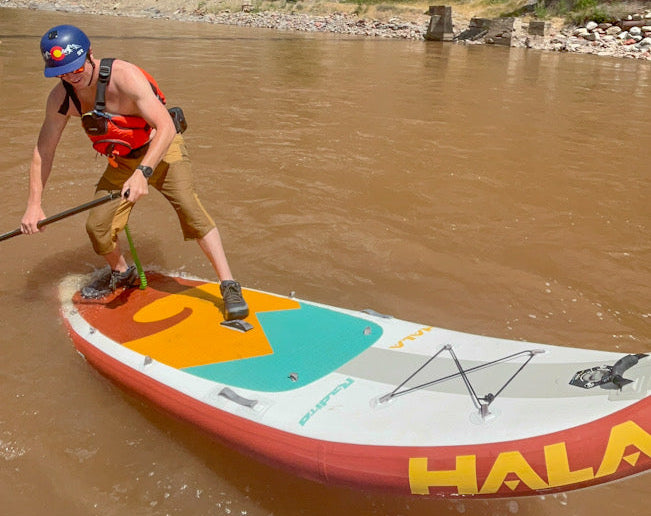
Hala Gear | Intentional Design
Rocker with a Purpose
Hala Gear features a range of nose and tail rocker options to enhance your adventure wherever you paddle. Every board is engineered around a deliberate rocker strategy: the right combination of nose and tail rocker to put your center of balance exactly where it needs to be for how that board is meant to perform. Not every board rocks the same. All of them rock with intention.


Video
more reasons you'll say
Hala boards are made better
5-year warranty
Learn Moresup shape
Learn More
construction
Learn More